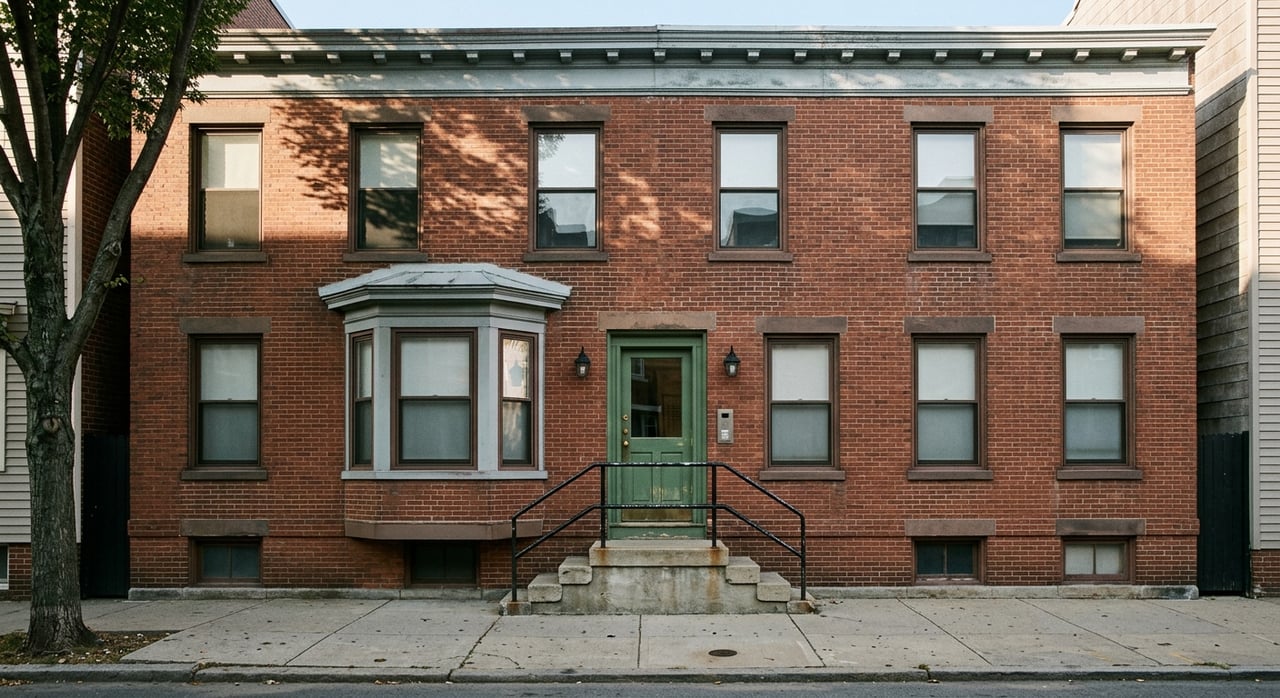
Buying your first home in Brooklyn can feel like trying to solve two problems at once: finding a place you can afford and keeping your monthly payment manageable. If you are looking at Brownsville, a two-family home may offer a practical path forward because you can live in one unit and rent the other. That setup can make homeownership more realistic, but only if you go in with clear numbers and realistic expectations. Let’s dive in.
Why a Brownsville two-family stands out
Brownsville remains one of Brooklyn’s lower-rent neighborhoods, and that matters if you are searching for a starter home with income potential. The Furman Center ranks Brownsville 53rd out of 59 neighborhoods on rents, and the neighborhood’s homeownership rate was 15.8% in 2025. For many buyers, that points to an area where ownership is still less common and where a multi-family purchase can be a strategic way to enter the market.
Recent sales and price data also show why Brownsville gets attention from first-time buyers and small investors. Redfin reported a March 2026 median sale price of $665,000, Realtor.com showed a March 2026 median asking price of $714,000, and NYC Finance records show two-family sales in late 2025 and early 2026 from $365,000 to $950,000. The wide range is important because in Brownsville, condition, occupancy, and renovation level can affect price as much as the address.
Price range means you need context
A low asking price does not always mean a simple deal. A property may need major repairs, have a tenant situation that affects financing, or come with higher carrying costs than you expected. On the other hand, a more updated home may offer fewer surprises after closing.
That is why a Brownsville two-family works best when you look past the headline price. You want to compare the building’s condition, current occupancy, likely repair needs, and realistic rental income together. A starter home only helps if the full monthly picture makes sense.
How the starter-home strategy works
The basic idea is simple: you live in one unit and rent the other. The rent from the second apartment can help offset part of your mortgage, taxes, insurance, and upkeep. For buyers priced out of a single-family purchase, that extra income stream can make ownership more practical.
This strategy can be especially appealing in Brownsville because the neighborhood had 100 sales of 2-4 family buildings in 2024. That level of activity shows there is an active market for small multi-family properties. It is not a niche idea here. It is a real part of how people buy and own property in the neighborhood.
What lenders usually count
If you plan to use rental income to help qualify, it is important to understand that lenders do not usually count every dollar. Fannie Mae says lenders generally use 75% of gross rent from a lease or market-rent report. They also generally do not let you use rent from the unit you will live in to qualify.
In plain terms, the second unit can strengthen your loan file, but it usually does not replace your own income. You still need enough stable qualifying income to support the purchase. That is one reason this approach rewards buyers who are financially prepared and not just hoping the tenant will carry the house.
Why FHA often enters the conversation
For many first-time buyers, FHA financing is the starting point because HUD says down payments can be as low as 3.5% on 1-4 unit properties. That lower entry point can make a two-family purchase more attainable than many buyers expect. It also helps explain why owner-occupied multi-family homes are often part of the conversation for budget-conscious buyers.
Still, low down payment does not mean low responsibility. You will need to budget for closing costs, reserves, monthly housing expenses, and repairs. A two-family starter home can open the door, but it still requires careful planning.
A simple rent example
Brownsville rent figures vary by source, which is why conservative estimates matter. Furman Center reported a 2024 median gross rent of $1,350 overall and $1,440 for 2- and 3-bedroom units, while a listing-based tracker showed a 2026 median asking rent of $2,625 for a two-bedroom. Those numbers are not interchangeable, but they do show a range you need to evaluate carefully.
If a lender used a $2,625 market-rent figure and applied the 75% rule, that would equal about $1,969 in qualifying income. That can help, but it is very different from assuming you can count the full asking rent. The safer approach is to build your plan around modest rent and leave room for vacancies or repairs.
Carrying costs matter as much as the mortgage
A two-family purchase is not just about principal and interest. In New York City, many Brownsville two-family homes fall into Tax Class 1 because that class includes most residential property of up to three units. NYC Finance says Class 1 homes are valued using sales of similar nearby properties rather than the income-based method used for larger residential buildings.
For you, that means property taxes and assessed value should be part of your review before closing. You want to understand the full carrying cost, not just the purchase price. A deal can look affordable on paper and still feel tight month to month if taxes, insurance, utilities, and repairs are underestimated.
Build a real reserve
Brownsville’s numbers support a cautious budget. The neighborhood’s rental vacancy rate was 1.4% in 2024, and Furman also reported 184.5 serious housing code violations per 1,000 privately owned rental units. That does not mean every property has major issues, but it does mean building condition deserves close attention.
A smart starter-home plan includes:
- A repair reserve for unexpected fixes
- A vacancy allowance, even if demand looks strong
- A thorough inspection process
- A realistic maintenance budget after closing
If you skip those steps, the second unit can feel less like financial help and more like a source of stress.
What day-to-day ownership really looks like
Owning a two-family and living in one unit can be rewarding, but it is hands-on. You are not just a homeowner. You are also responsible for maintaining a rental unit and meeting city requirements as a landlord. That means the starter-home strategy works best if you are comfortable with the practical side of ownership.
New York City’s Tenant Bill of Rights says tenants are entitled to a clean, well-maintained home, reliable essential services, working smoke and carbon monoxide detectors, and secure locks. Security deposits are capped at one month’s rent and must be returned within 14 days after move-out. These are not optional details. They are part of the job when you buy a two-family and rent one unit.
If a tenant issue comes up
You also need to know what you cannot do. If a tenant stops paying, landlords must still use the courts. They cannot change locks, remove belongings, or shut off utilities.
That matters because some first-time buyers imagine the rental side as passive income. In reality, it is a business relationship with rules, timelines, and legal responsibilities. Going in with that mindset can help you avoid expensive mistakes.
Why paperwork and status still matter
An owner-occupied two-family is often simpler than an absentee-owned rental, but it is not paperwork free. HCR says owners of rent-stabilized buildings must file apartment registrations in certain situations, including buildings that became subject through tax benefits such as 421-A or a regulatory agreement. Regulatory status should always be checked before you buy.
NYC HPD annual building registration is required for 3+ unit buildings and for 1-2 unit private dwellings where neither the owner nor immediate family lives in the property. So if you buy a Brownsville two-family and live there, your setup may be simpler than a non-owner-occupied rental. But if you later move out, your obligations may change.
How to judge if the numbers work for you
A Brownsville two-family can be a smart starter home when the numbers are honest. The strongest version of this strategy assumes modest rent, real repair costs, and full legal compliance. It does not depend on perfect collections or a best-case renovation budget.
As you compare properties, focus on a few basics:
- Your own qualifying income without stretching too far
- A conservative estimate of rent from the second unit
- The building’s repair needs today, not someday
- Property taxes and other monthly carrying costs
- Whether you are ready for landlord responsibilities
That approach helps you separate a workable first home from a deal that only looks good in an online calculator.
Where local guidance helps
In Brownsville, two-family homes do not trade on price alone. Occupancy, renovation level, layout, and building condition all shape what a property is worth and how financeable it is. That is why local guidance matters when you are trying to buy your first home and also evaluate rental income potential.
A practical review can help you understand whether a property fits your budget, what rent assumptions make sense, and where the real risks are. When you are buying a starter home with an income component, clear underwriting and neighborhood context can save you time and money.
If you are thinking about using a two-family as your first home in Brooklyn, Parkview Terrace Realty can help you look at the numbers clearly and move forward with practical local guidance.
FAQs
What makes a Brownsville two-family different from a single-family starter home?
- A Brownsville two-family gives you the option to live in one unit and rent the other, which can help offset part of your monthly housing cost, but it also adds landlord responsibilities and operating costs.
Can you use rental income to qualify for a Brownsville two-family mortgage?
- In many cases, lenders count only 75% of gross rent from a lease or market-rent report, and they generally do not count rent from the unit you will occupy.
Is FHA financing available for a Brownsville two-family home?
- HUD says FHA down payments can be as low as 3.5% on 1-4 unit properties for eligible owner-occupants, which is why FHA is often part of the conversation for first-time multi-family buyers.
How much do Brownsville two-family homes cost?
- Recent data in the research report show a broad range, with Brownsville two-family sales in late 2025 and early 2026 running from $365,000 to $950,000 depending on condition, occupancy, and renovation level.
What should you budget for beyond the mortgage on a Brownsville two-family?
- You should review property taxes, insurance, utilities, repairs, vacancy risk, and reserve funds, because the full carrying cost matters as much as the loan payment.
What landlord rules apply if you buy a Brownsville two-family and rent one unit?
- New York City requires landlords to provide a clean, maintained home with essential services, working smoke and carbon monoxide detectors, and secure locks, and landlords must follow legal court procedures if a tenant stops paying.