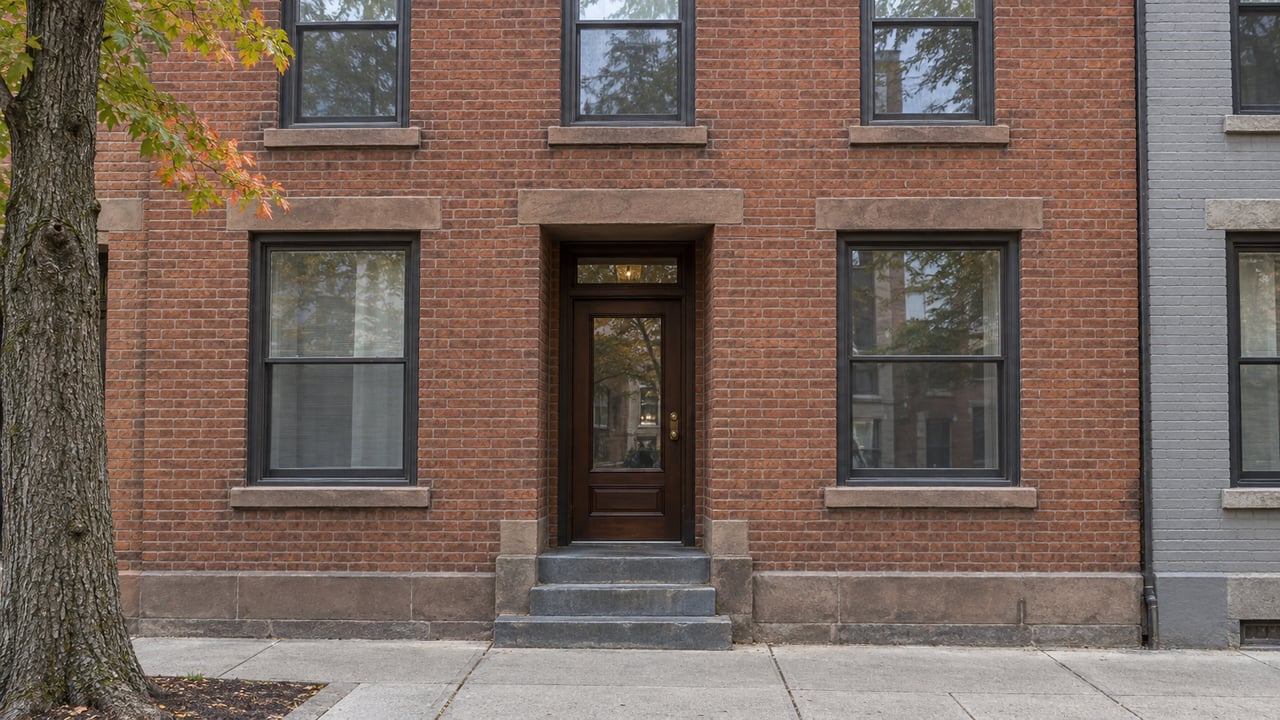
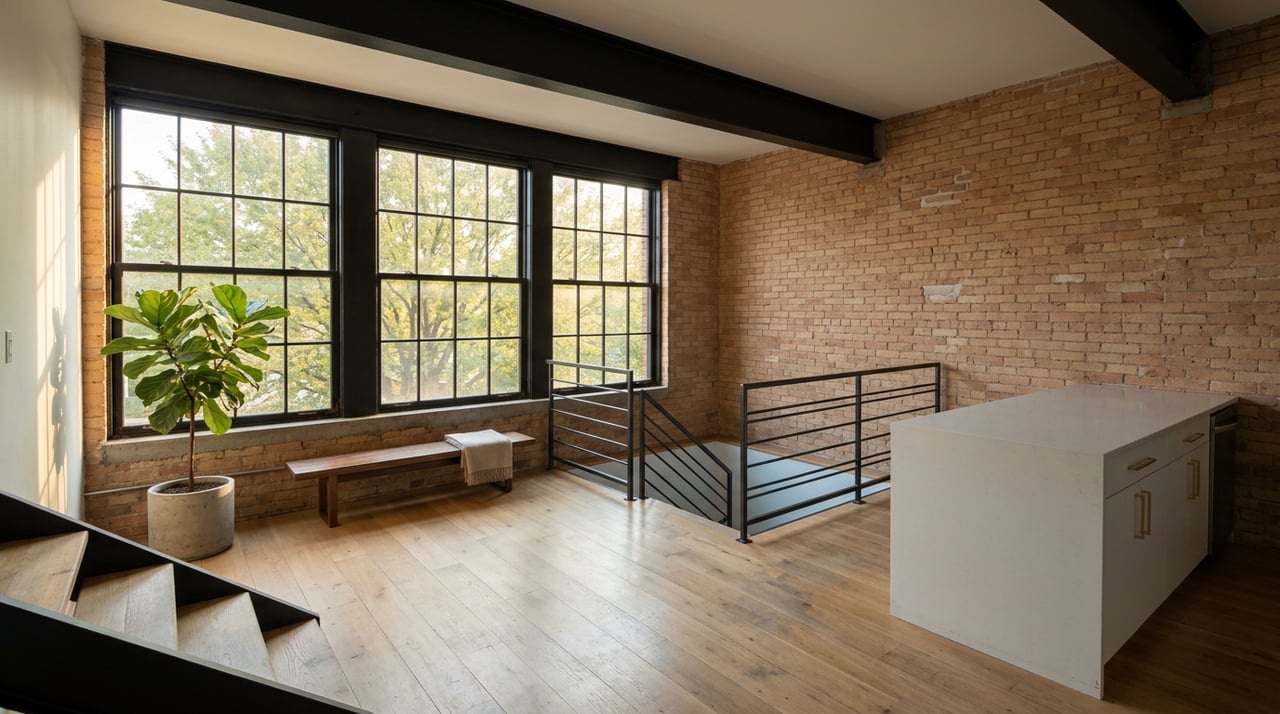
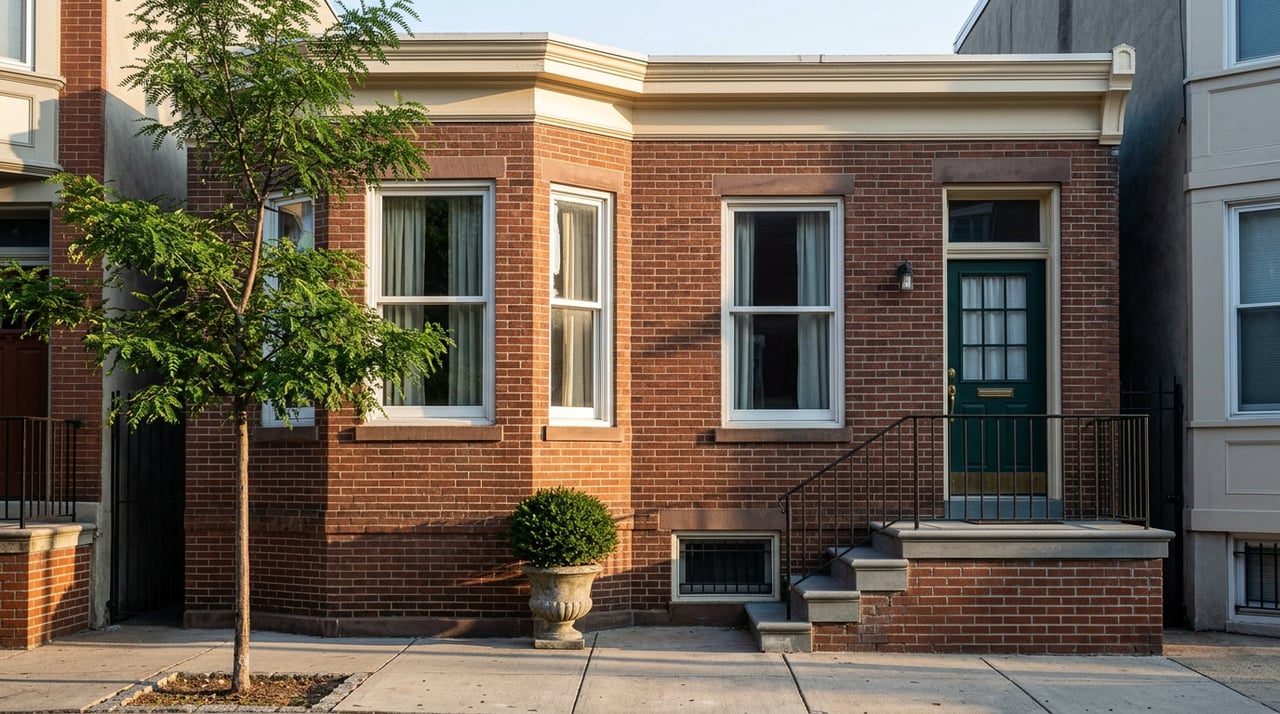
Two buildings, a few blocks apart, both in Sunset Park. One was a legal two-family semi-detached frame house near 3rd and 4th Avenues that came on the market earlier this year, about 2,248 square feet, with an annual property tax bill of roughly $8,146. The other was a four-family built in 1908, fully occupied, pulling in $5,250 a month in rent, zoned the same R6B as its neighbor. On paper they look like siblings. On the city's tax rolls they are not even in the same family.
That difference is not cosmetic. It is a big part of why a Sunset Park buyer can pull three "median price" numbers from three different sources this year and get three answers that do not agree with each other. The neighborhood does not have one housing market. It has three, stacked on top of each other, each priced and taxed by a different rulebook, and the word "median" flattens all of it into a single misleading figure.
The line that splits the neighborhood in half
New York City sorts every residential property into a tax class, and the line falls at four units. A building with three units or fewer is Class 1. A building with four units or more, along with most co-ops and condos in taller buildings, is Class 2. That single digit on a Notice of Property Value determines everything downstream.
Class 1 properties are assessed at 6 percent of market value, and state law caps how fast that assessed value can climb: no more than 6 percent in a year or 20 percent over five years. The city values them the way most buyers already think about pricing, by comparing recent sales of similar homes nearby.
Class 2 works on a completely different logic. The city assesses these buildings at 45 percent of market value, and by state law it has to value them as if they were rental property, using an income and expense model rather than comparable sales. For smaller Class 2 buildings, that means the city runs a gross income multiplier against your rent roll. For a building with ten units or fewer, assessed value can rise up to 8 percent a year or 30 percent over five years. Once a building crosses eleven units, that cap disappears entirely and any increase phases in over five years instead.
So the two-family and the four-family a few doors apart are not just different sizes. One is priced like a house. The other is priced like a small business, and the city has already decided how much income it thinks that business generates whether or not the current owner disputes it.
Three markets, one word
That split is what's breaking the median. Sunset Park's for-sale inventory splits roughly into three tiers, and each one moved on its own track through the first half of 2026.
At the bottom, condos and co-ops have been trading in the $400,000s to low $600,000s. One market tracker put the May 2026 median home sale price in Sunset Park at $452,000, down 9.5 percent year over year, on only seven recorded transactions that month, a sample small enough that a single closed sale can swing the number hard. Condo listings were carrying a median asking price of $605,000 as of mid-August 2026, sitting on the market around 100 days on average.
In the middle, owner-occupant one-, two- and three-family rowhouses, the Class 1 tier, were listing between roughly $1.1 million and $2 million as of May 2026, the kind of home a family buys to live in one unit and rent the other.
At the top, larger multi-family buildings, the Class 2 tier, were listing from about $1.2 million up past $5.3 million as of April 2026, with a median list price near $1.95 million across roughly 120 multi-family properties on the market, and an average time on market north of 140 days, because these deals move on rent rolls and financing timelines, not open-house enthusiasm.
Pull the median from a dataset weighted toward one tier and you get a wildly different headline than one weighted toward another. One tracker showed Sunset Park's median sale price at $1.5 million in March 2026, up 19 percent year over year, a number that only makes sense once you realize it's being pulled upward by a mix heavier on multi-family closings that month. A twelve-month rolling median through roughly the same period landed at $590,000, up a more modest 4 percent. Neither number is wrong. They are measuring different slices of the same neighborhood.
| Tier | Approximate price range (H1 2026) | Tax class | How the city values it |
|---|---|---|---|
| Condos and co-ops | $400K to $650K+ | Class 2 | Income model, even for owner-occupied units |
| 1-3 family rowhouses | $1.1M to $2M | Class 1 | Comparable sales |
| 4+ unit multi-family | $1.2M to $5.3M+ | Class 2 | Income model, rent roll and cap rate |
What the income tier actually prices on
A six-family listing from earlier this year makes the mechanism concrete. The building ran 33 by 68 feet, zoned R6B, six three-bedroom units, a rent roll of $10,020 a month, or $120,240 annualized, offered at a 5.1 percent cap rate. Nobody buying that building was thinking about square footage comps from the block. They were running the rent roll against the ask, checking the certificate of occupancy against the actual unit count, and modeling what the city's income-based assessment would do to the tax line in year two and year three, since assessed value chases that same income number upward under its own cap schedule.
The R6B zoning designation that shows up on listing after listing in Sunset Park traces back to a 2009 rezoning that capped most residential buildings in the neighborhood at around 80 feet. That height cap is part of why the rowhouse blocks have stayed a consistent two and three stories instead of pushing taller, and why a lot with room to legally add a unit gets bid up differently than one already built to its limit. The zoning doesn't set the tax class, but it shapes which properties are candidates for tipping from Class 1 into Class 2 in the first place.
Sunset Park's co-op stock adds one more wrinkle worth knowing if you're comparing ownership types. Alku, on the east side of the neighborhood, was built in 1916 and is believed to be the first nonprofit co-op in the United States. It's a reminder that co-ops here are Class 2 by default regardless of building size. The building gets one tax bill, and it gets divided among shareholders through maintenance, not through a separate line on anyone's personal tax statement.
Why the timing makes this worth getting right
None of this is happening in a vacuum. Institutional money has been moving toward Sunset Park's waterfront for a few years now. Steiner NYC has been building a 500,000-square-foot soundstage at the Bush Terminal campus. In 2025, Watermark Capital Group and Rubin Equities landed a $210 million construction loan for a 28-story, 497-unit residential tower going up over the 8th Avenue subway station. Industry City, now home to more than 550 businesses across its 16 buildings under developer Jamestown, continues to draw new employers and foot traffic to the avenues that feed the neighborhood's smaller multi-family stock.
That kind of capital tends to lift asking prices across all three tiers at once, but it doesn't make the tiers behave more alike. If anything, rising rents make the income-tier math more attractive to sellers and more unforgiving to buyers who skip the underwriting. A buyer comparing Sunset Park to another Brooklyn neighborhood needs to know which of the three markets they're actually shopping in before the median price on a portal means anything to them.
A few questions worth settling before you make an offer
If my two-family has a finished basement apartment, does that push me into Class 2? It depends on whether that basement unit is a legal, certified dwelling unit under the certificate of occupancy. An illegal or unregistered basement apartment doesn't change your tax class, but it also isn't income the city, a lender, or a buyer's appraiser will credit you for. Confirm the C of O before you assume either way.
Why did my assessment jump even though prices in my tier dropped recently? Assessment caps work in both directions and with a lag. If your assessed value was below what the caps would have allowed in a prior year, the city can let it catch up even while current market prices are softening.
Does a small multi-family always get the friendlier 8 percent cap? Only up to ten units. At eleven units and above, the annual cap disappears entirely and the city phases in assessment changes over five years instead, which is a meaningfully different risk profile for anyone underwriting a larger building.
If you're weighing a Sunset Park purchase against a rowhouse in another Brooklyn neighborhood, or trying to figure out which of these three tiers your budget actually lives in, Parkview Terrace Realty has been running these numbers out of the same Sunset Park storefront for close to three decades. Get a free home valuation and we'll walk you through what your specific building is actually priced and taxed as, not just what the median says.